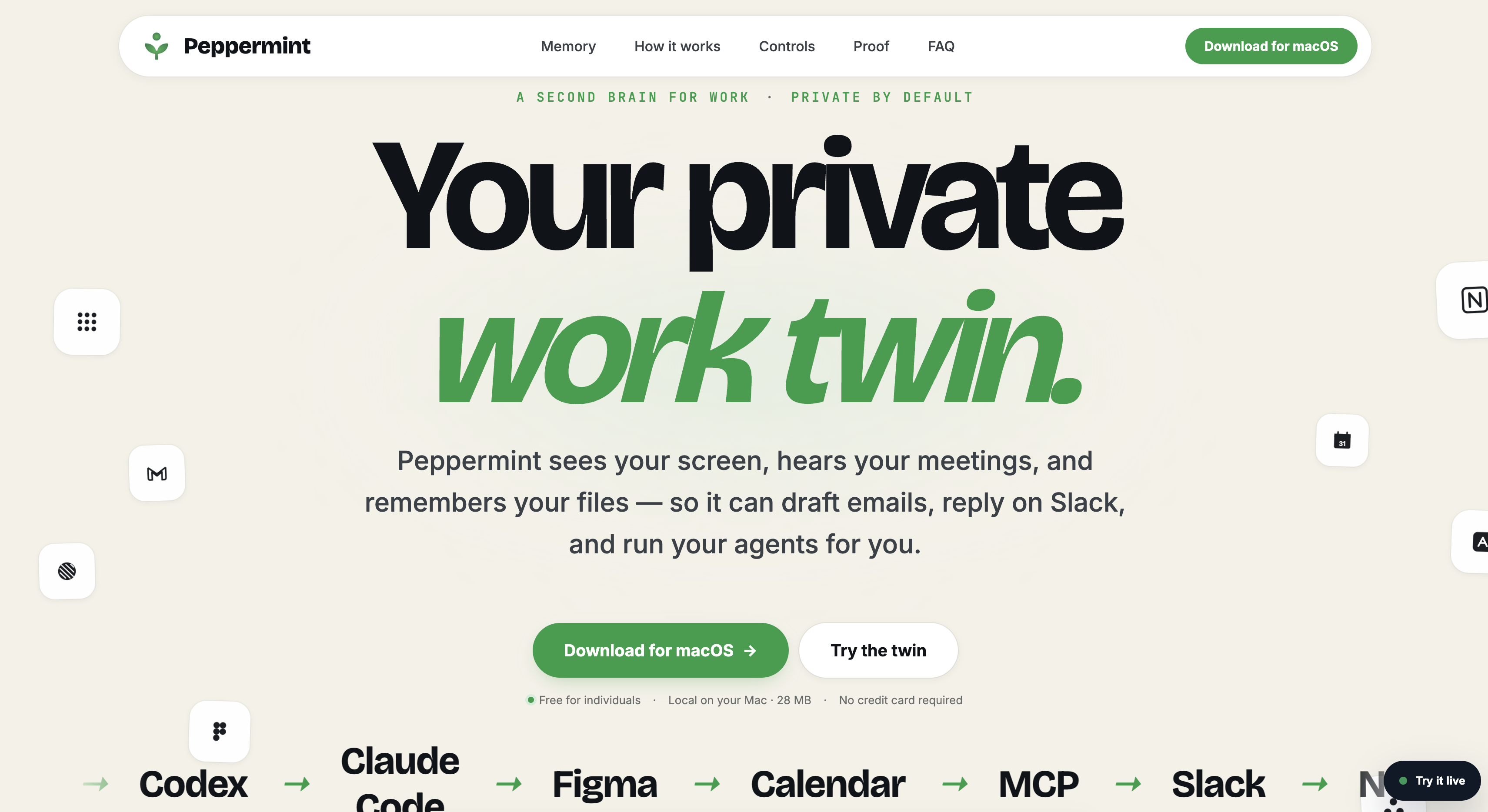
Case study — Peppermint (AI Product Manager · Product Designer · Product Engineer)
Website: https://www.peppermint.com/
Designing a trustworthy AI that remembers — turning passive context into a queryable digital twin.
Peppermint is an AI-native desktop assistant (macOS + Windows) that passively captures a user's work context — screen, audio, app focus — builds a private, persistent memory of it, and turns that into something you can query and act on: proactive notifications, contextual chat, auto-replies, and expert playbooks. It also lives where teams already work — in Slack — as a personal digital twin (that answers and auto-replies on your behalf) and a team-wide org twin (that answers across everyone's shared context). Sabrina came in early and owned UX/UI design and frontend implementation from the first flows through the current product, plus the product decisions along the way.
Her role and scope
- Role: Product Manager, AI Product Designer & Product Engineer (Oct 2025 – present).
- Surface: the entire product — the macOS app (Swift/SwiftUI), a Windows client (C#/.NET), a Next.js web dashboard, and a Python/FastAPI backend.
- Scale: she shipped ~165 commits and owned ~130 Linear tickets (~110 done) — as the primary product / design / frontend owner on an 11-person, ~1,800-commit codebase (the third-most-active contributor overall, alongside two backend engineers). She writes the spec, designs it, builds the UI, and makes the UX/product calls — she doesn't just hand off.
The challenge
An assistant that watches your screen and remembers everything is only valuable if people trust it. The core design problem wasn't "can it chat" — it was: how do you make passive capture feel safe, keep a memory that never leaks across users or hallucinates, and get a brand-new user from "just installed" to "this is actually useful" without friction? That's a product, design, and trust problem as much as an engineering one.
What she designed and shipped
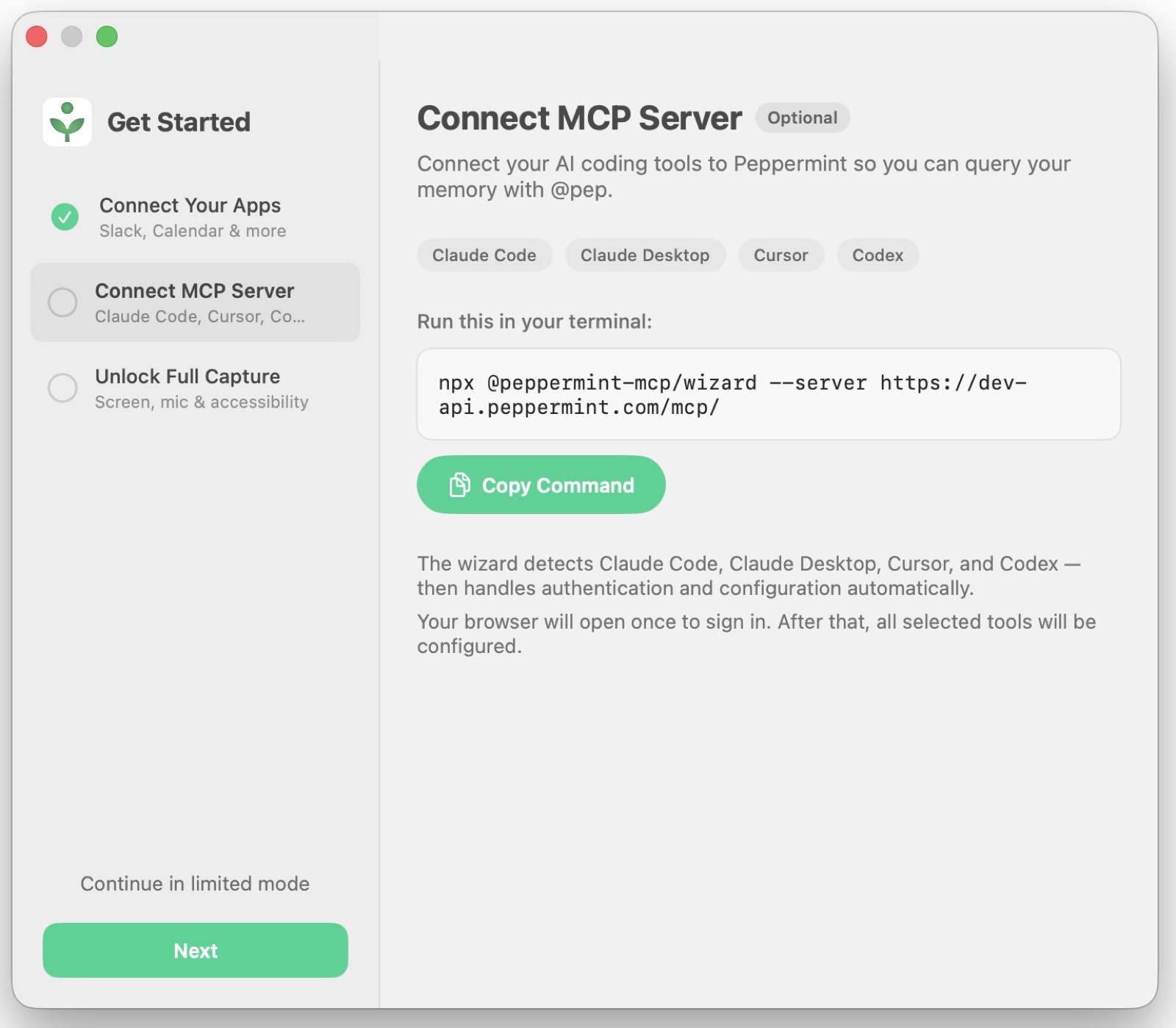
Onboarding & activation. Repeatedly redesigned the new-user flow: a permissions experience built around a "twin" trust metaphor (fixing the macOS quit-and-reopen dead-ends), a value-first first-run and first-test, an LLM prompt-and-paste step replacing a pill questionnaire, skippable integrations, BYOK setup, cloud-vs-local hosting choices, and a "get up to speed" activation checklist that auto-checks real account state.
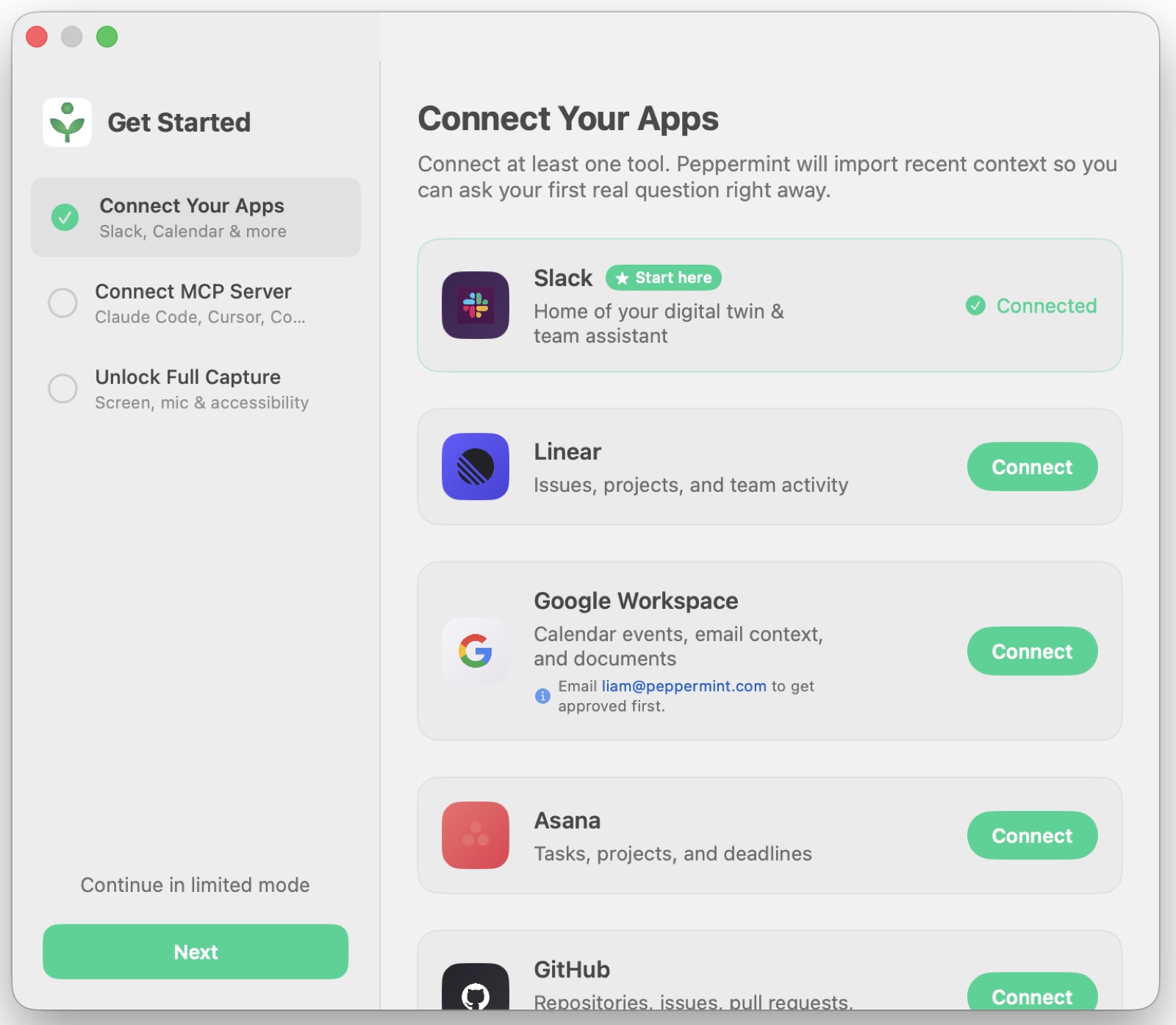
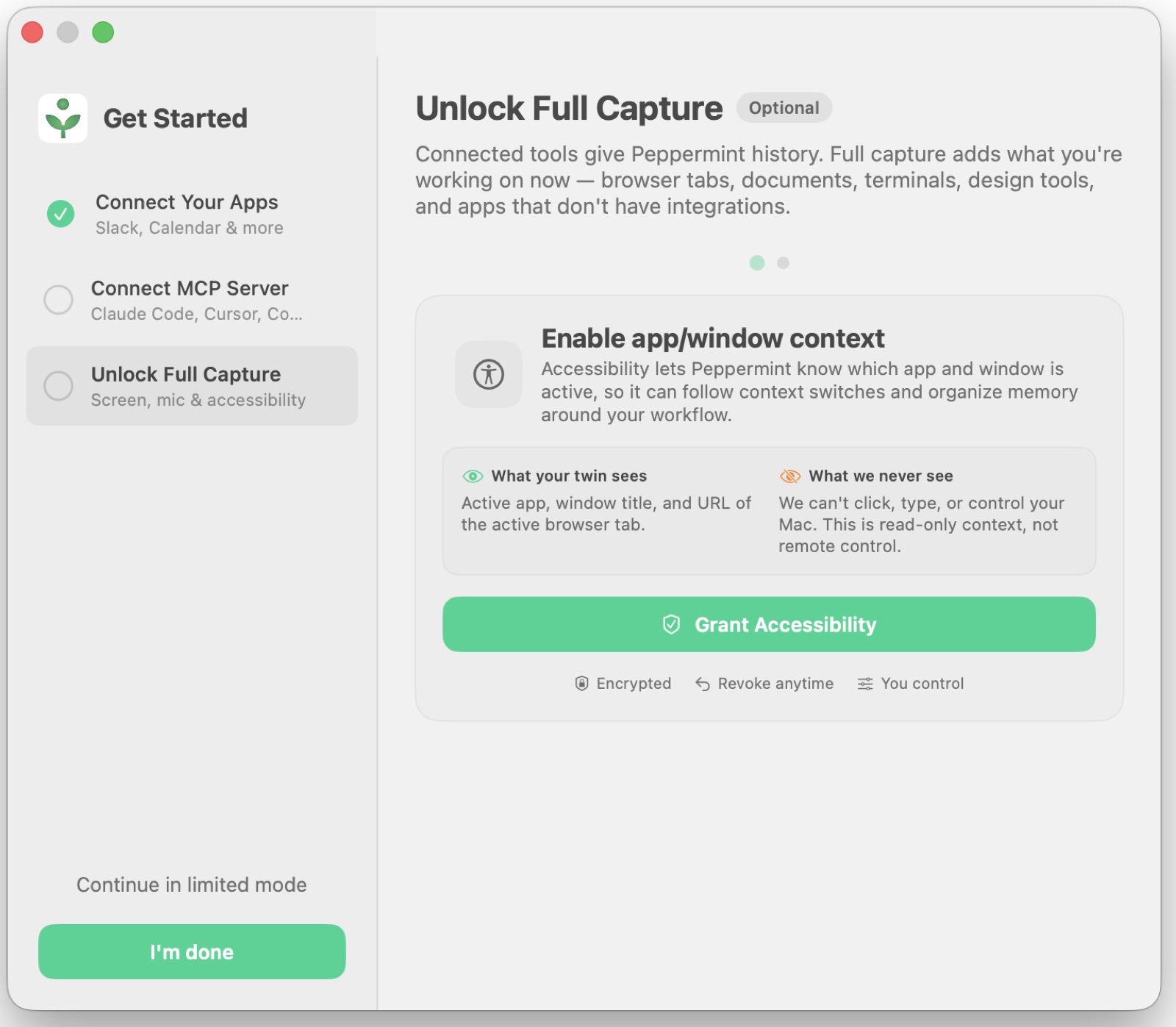
The Slack twin — a digital twin and an org twin. Peppermint lives where teams already work: in Slack. Each person gets a digital twin that answers and auto-replies to their @-mentions on their behalf, and the team gets an org twin that answers team-wide questions across everyone's shared context ("what's the team working on?"). Sabrina designed the Slack onboarding, the "your twin is ready" hand-off, the @Peppermint query flow, and the guardrails that keep it a helpful answer rather than noise.
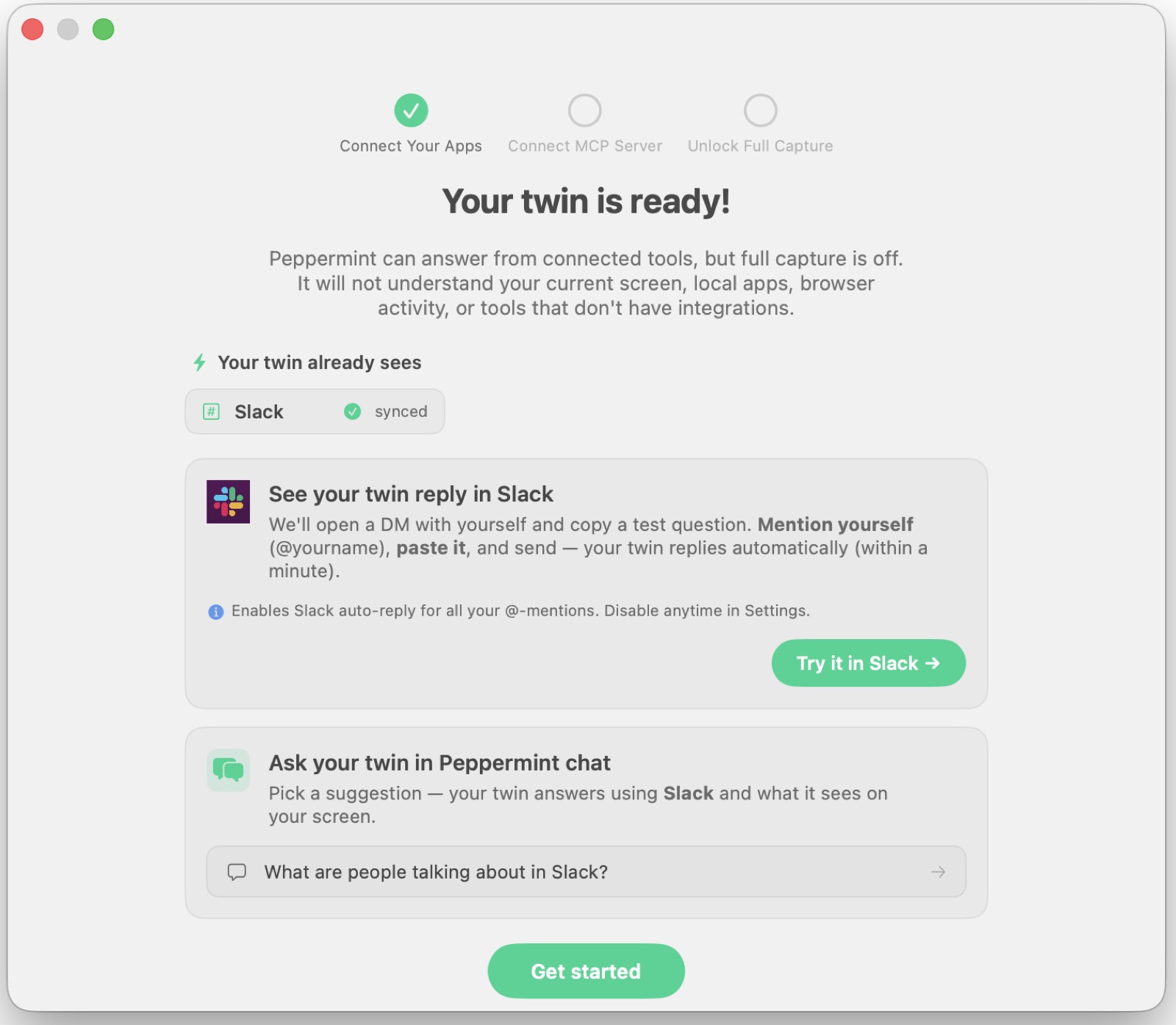
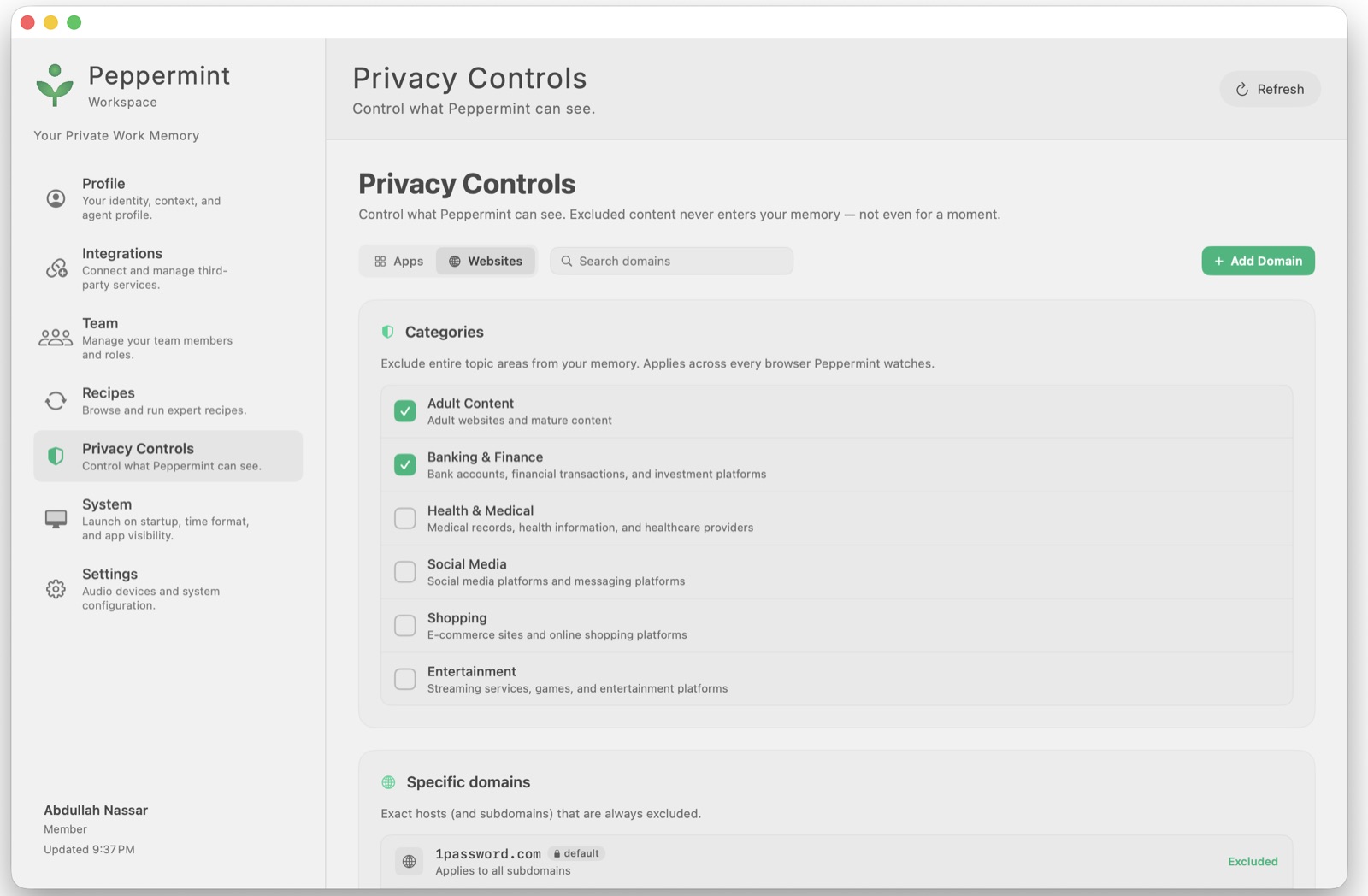
Privacy & trust — the hardest part. Designed and helped build an LLM-based content-classification layer that flags sensitive content and walls it off from cross-user reads, closed leak surfaces across facts / the org graph / summaries, added server-side filtering, and shipped user-facing Privacy Controls (exclude apps and websites by category or domain). Trust as a feature, not a footnote.
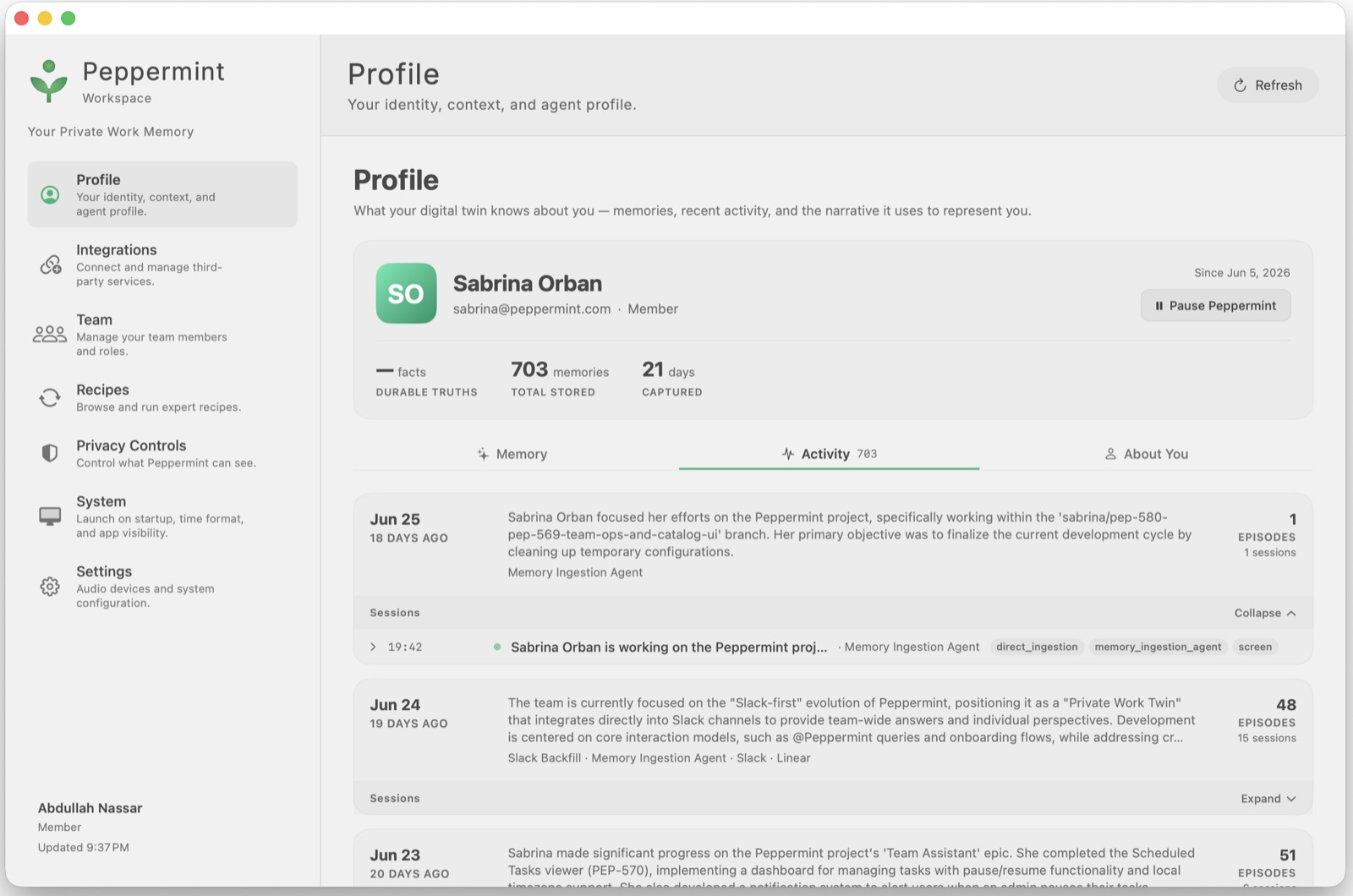
Memory, profile & anti-hallucination. Wired the Profile "Memory" tab to real backend facts with edit/delete and embedding-similarity conflict detection, and added guardrails so scheduled outputs never fabricate content when context is empty.
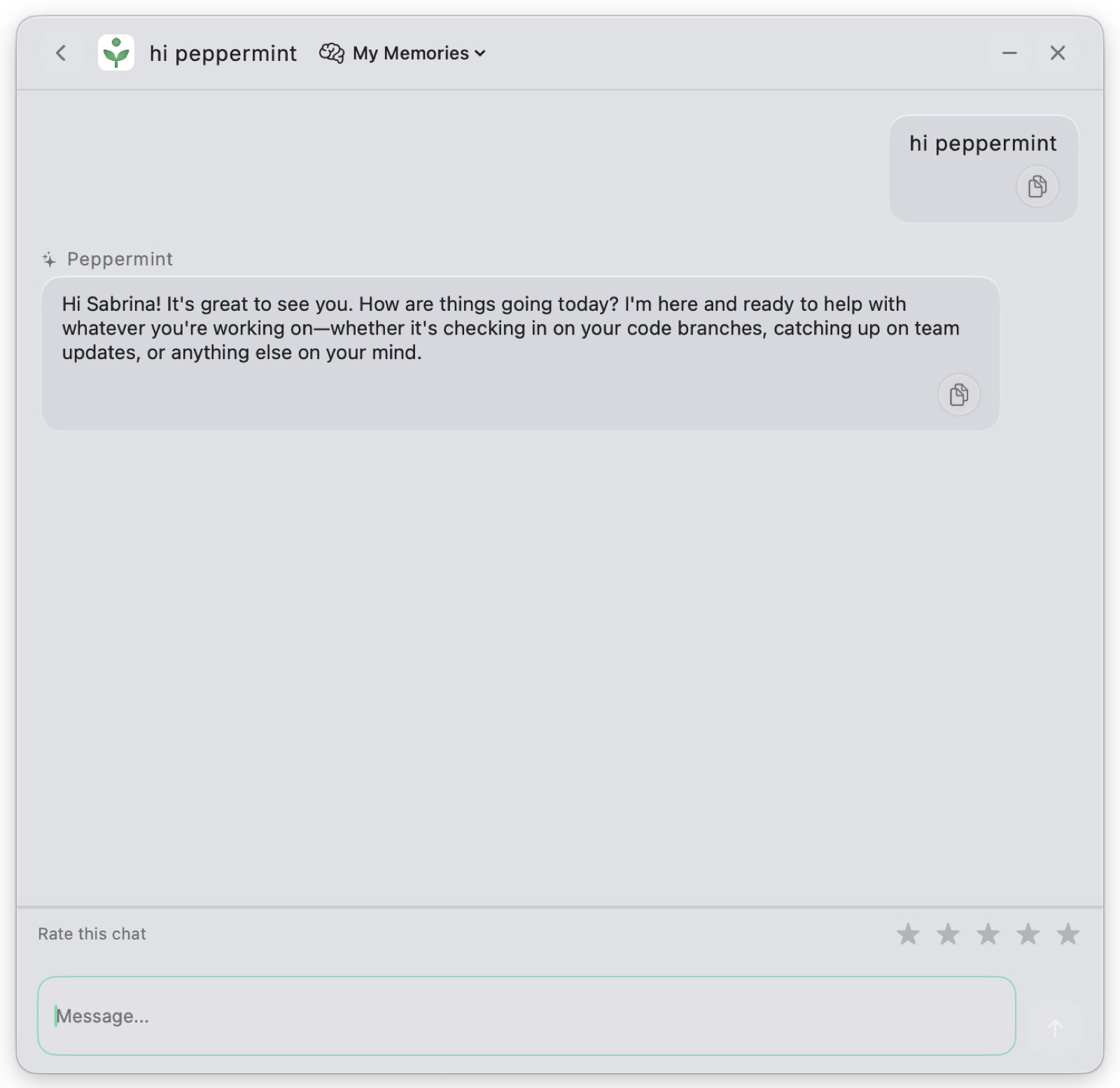
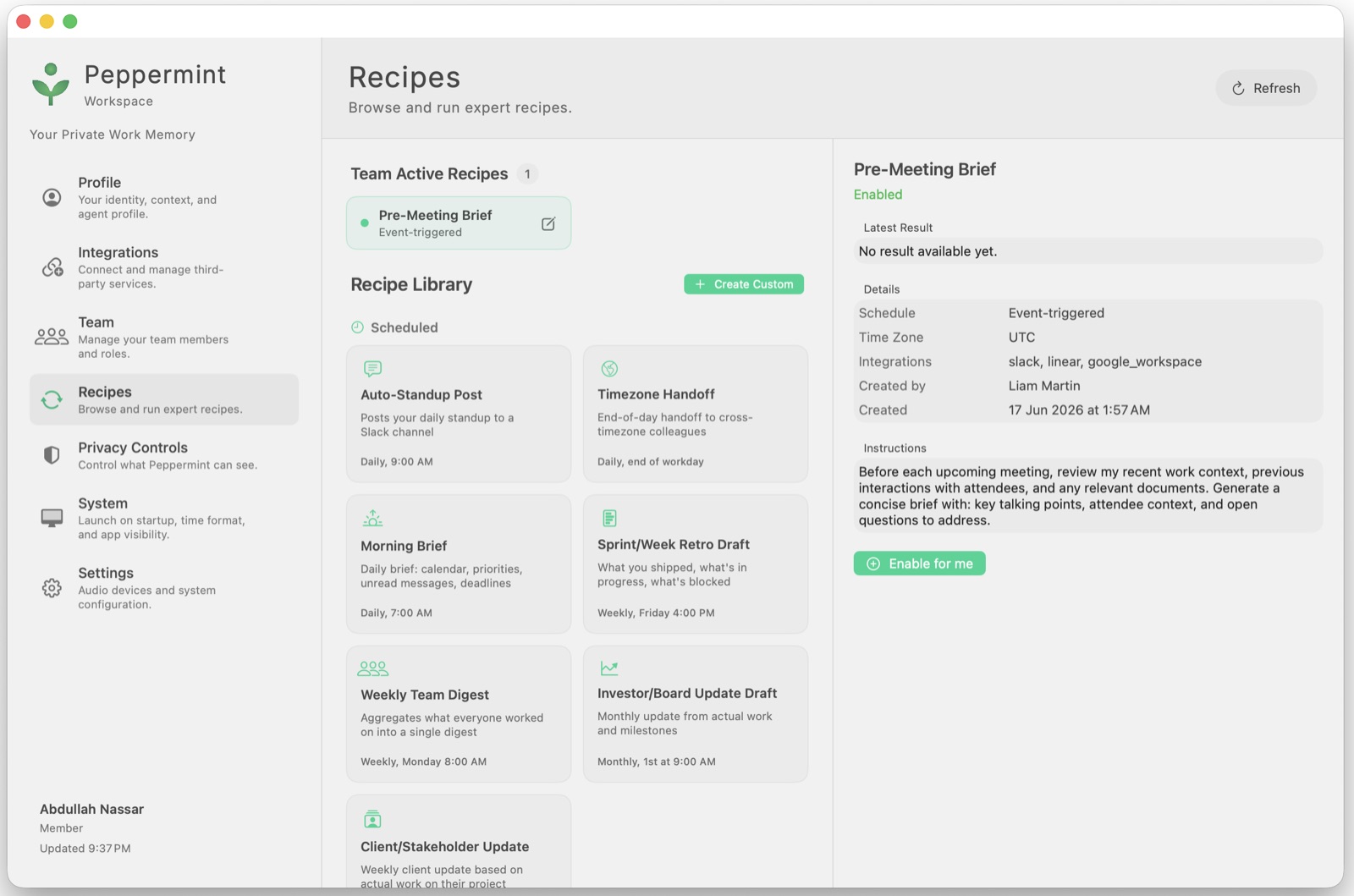
Recipes, chat & the assistant experience. Turned a blank-slate routine creator into a library of expert, versioned playbooks ("Recipes") with a full-method catalog on web and Mac; designed the chat UX/UI, the notification interaction model, and the menu-bar presence; and shaped AI behavior guardrails (e.g. drafts-for-approval instead of auto-posting).
Team assistant, integrations & cross-platform. Built the team dashboard, scheduled- task viewer, and roles/permissions pages; a minimal-scope integration policy with a plain-language "what Peppermint can access" summary on every connect screen; Slack / WhatsApp auto-replies and MCP integrations with tools like Claude and Cursor; and brought the Windows client to parity (meeting overlay, theming, crash fixes).
How she worked
Spec → design → build → ship → measure. The activation funnel she designed is fully instrumented in PostHog end-to-end — install → onboarding → first question answered → integration connected → chat — so every step of the journey she shaped is measurable, not guessed. She moves fluidly between Swift, TypeScript, and Python, and makes the naming, flow, and default decisions inside each ticket.
Why it matters
Peppermint is the fullest expression of the thread that runs through Sabrina's work — and through this very portfolio: AI systems built on real memory, identity, and trust, not stateless chat. The same instinct behind the privacy layer (classify, wall off, never hallucinate) is why this site stores nothing about its visitors server-side. She took an ambitious, sensitive idea and made it feel usable and safe across four platforms.